The following information is intended for healthcare professionals only. Always read the label and follow the directions for use.
-

ANZ
North America
South America
Europe
Middle East / Africa
Asia / Pacific

AutoShieldTM Duo
Safety Pen Needle
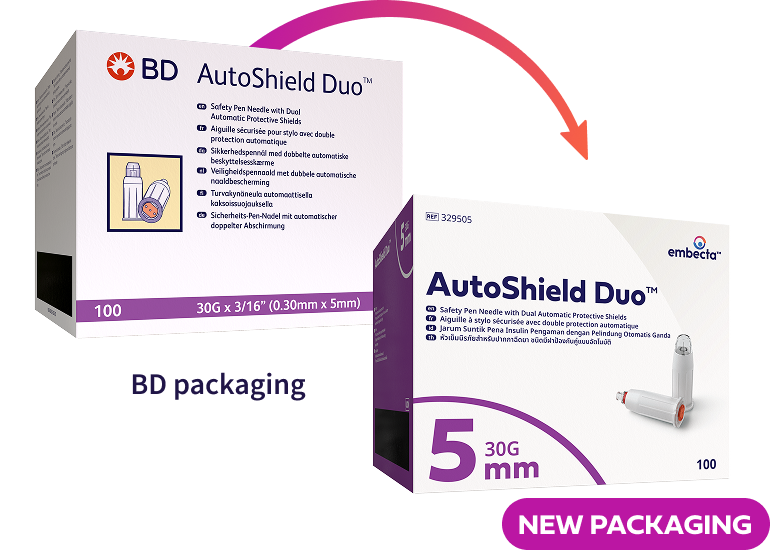
New lookSame products you know and trust
We are excited to introduce you to the new embecta packaging.
LEARN MOREAccidental needlestick injuries can occur at the front and back ends of the pen needle1,3
In a study, insulin pens accounted for the most frequent cause (40%) of needlestick injuries (NSIs) in nursing homes.4*
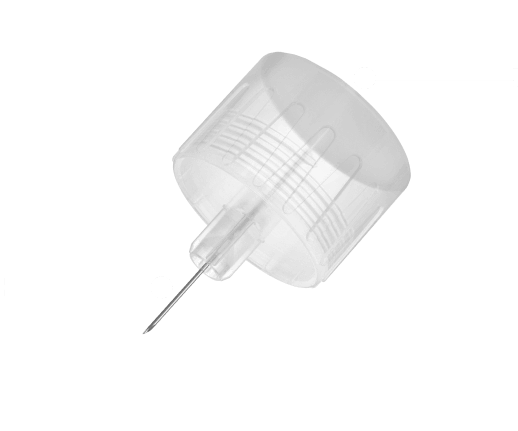
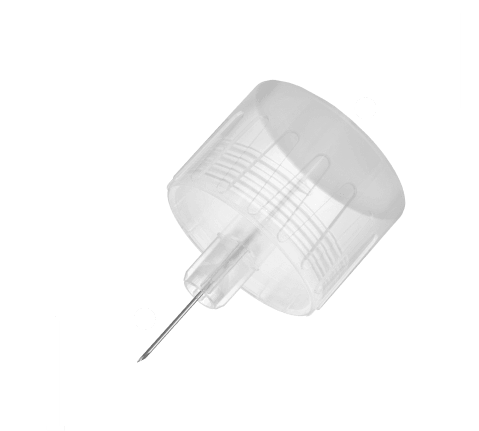
In surveys of nurses who had experienced an NSI with a pen needle, between 10-20% reported being injured from the back end of a pen needle.5,6†
Built with safety in mind
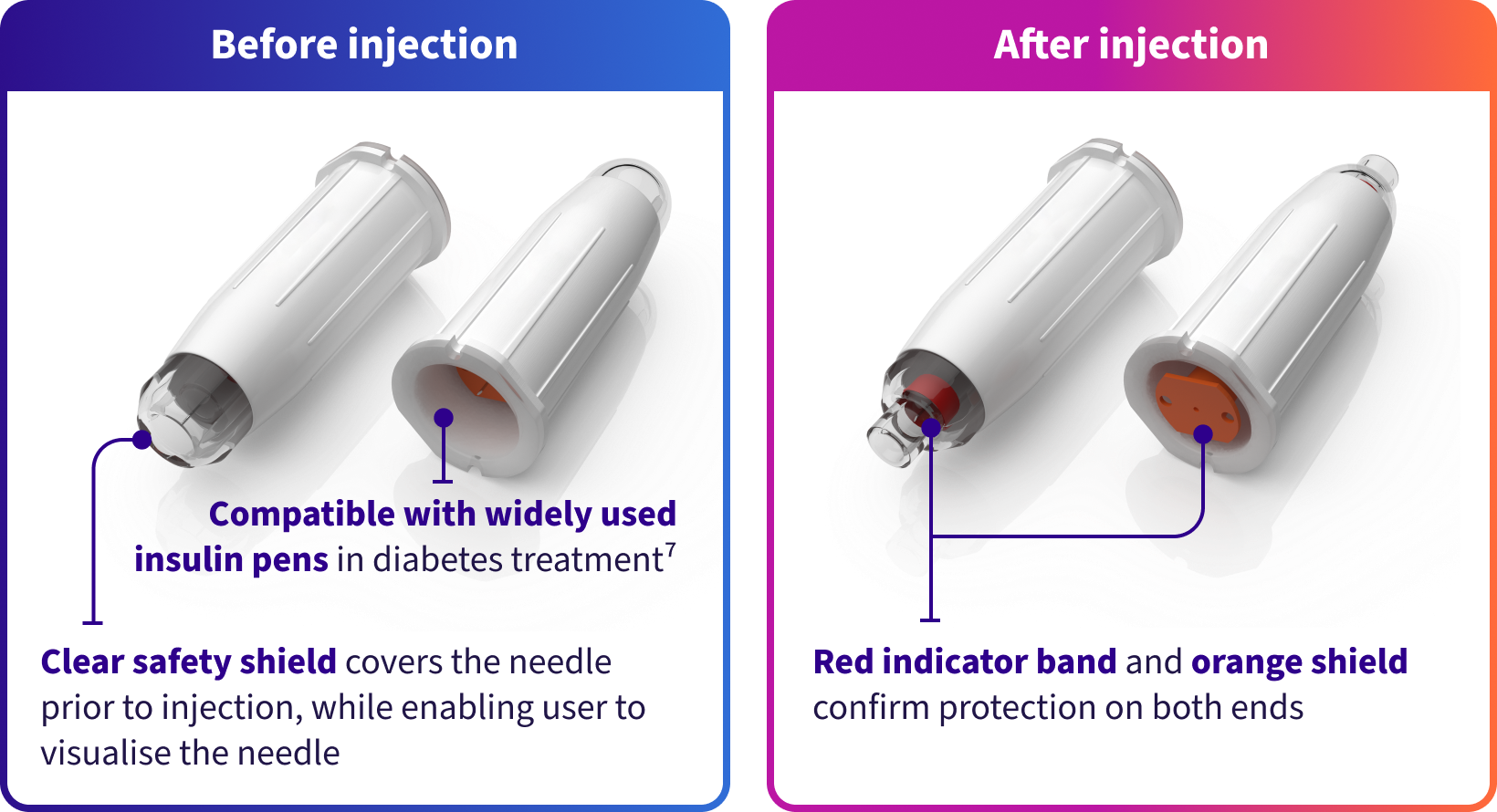
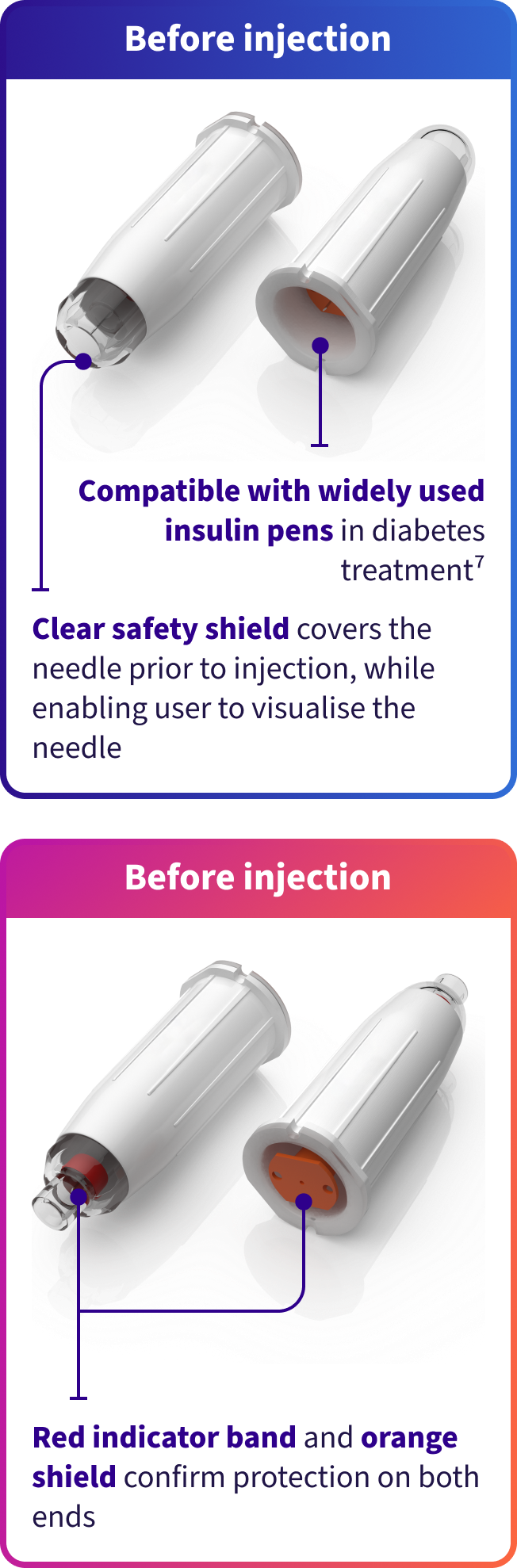
The AutoShield DuoTM Safety Pen Needle features a 5mm needle that is automatically concealed at both ends after use, reducing the risk of accidental NSIs
Using 5mm safety pen needles without a lifted skinfold technique is recommended, minimising the risk of NSIs through it.1‡
The majority of nurses surveyed have reported a positive experience with AutoShield DuoTM Safety Pen Needles8§
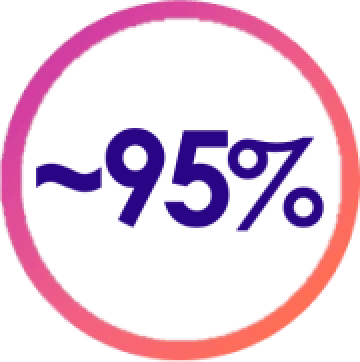
Approximately 95% of nurses agree that AutoShield DuoTM Safety Pen Needle has a reliable safety mechanism.8§
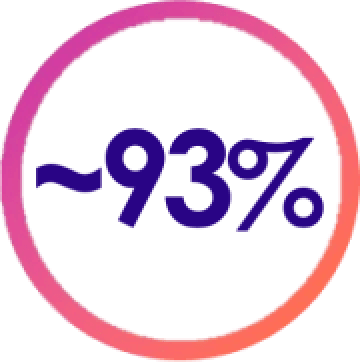
Approximately 93% of nurses agree that the AutoShield DuoTM Safety Pen Needle is quick and simple to attach to an insulin pen, as well as to remove and dispose of the needle.8§

AutoShield DuoTM Safety Pen Needles educational resources
Discover educational resources from embecta to support your teams and your organisation.
Your patients can find additional resources at embecta.com.
*The study was conducted in 45 nursing homes from April 2002 through December 2007 in Belgium.
†One survey included 634 nurses in 13 countries in western Europe and Russia who inject diabetes treatment, the second survey included 9,873 hospital nurses who administer diabetes injections in China.
‡Patients ≤6 years old and very thin adults may require a pinch-up.
§A double-blinded survey with 175 nurses from 36 states in the US commissioned in fall 2021.
References
1. Frid AH, Kreugel G, Grassi G, et al. New insulin delivery recommendations. Mayo Clin Proc. 2016;91(9):1231-1255.
2. Le Floch JP, Herbreteau C, Lange F, Perlemuter L. Biologic material in needles and cartridges after insulin injection with a pen in diabetic patients. Diabetes Care. 1998;21(9):1502-1504.
3. Melissa K. Schaefer MK, Kossover RA, Perz JF. Sharing insulin pens: are you putting patients at risk? Diabetes Care. 2013; 36(11):e188-e189.
4. Kiss P, De Meester M, Braeckman L. Needlestick injuries in nursing homes: the prominent role of insulin pens. Infect Control Hosp Epidemiol. 2008;29(12):1192-1194.
5. Costigliola V, Frid A, Letondeur C, Strauss K. Needlestick injuries in European nurses in diabetes. Diabetes Metab. 2012;38 Suppl 1:S9-S14.
6. Zhao F, Zhang M, Xuan J, et al. Burden of insulin injection-related needlestick injuries in mainland China-prevalence, incidence, and healthcare costs [published correction appears in Int J Nurs Stud. 2020 Sep;109:103534]. Int J Nurs Stud. 2019;97:78-83.
7. Compatibility Confirmation for Safety Pen Needles/149OTH-0003-77 Rev U – 2025-11-18.
8. Self-reported Satisfaction and Evaluation of the AutoShield DuoTM. A survey of acute care and skilled nursing users. 2021.