

Proper injection technique impacts diabetes management
Starting with our creation of the first syringe for insulin delivery in 1924, we’ve provided the innovation and resources that help you inject your insulin correctly.1
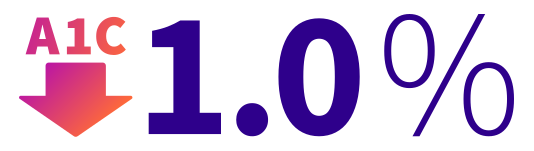
Proper injection technique can help lower A1C2*
People with diabetes who received training on how to inject correctly, including using a new needle for every injection, rotating injection sites, and moving to a shorter 4mm or 5mm needle, experienced a 1% average reduction in A1C after 6 months.2*
Empower your insulin management
Follow these 3 steps every time you inject
1. Using a new needle

2. Rotating injection sites
3. Using a shorter needle
1. Use a new needle each time
Avoid increased injection pain and reduce the risk of lumps (lipo) by using a new needle for every injection.3-4†
Stay prepared with these tips:
- Check your supplies: Always verify your pen needle or insulin syringe supply before refilling your insulin prescription.
- Consider auto-refill: Ask your pharmacy team if auto-refill of needle supplies is a good option for you.
- Pack extras: Bring extra needles when you know you'll be away from home.
2. Rotating injection sites
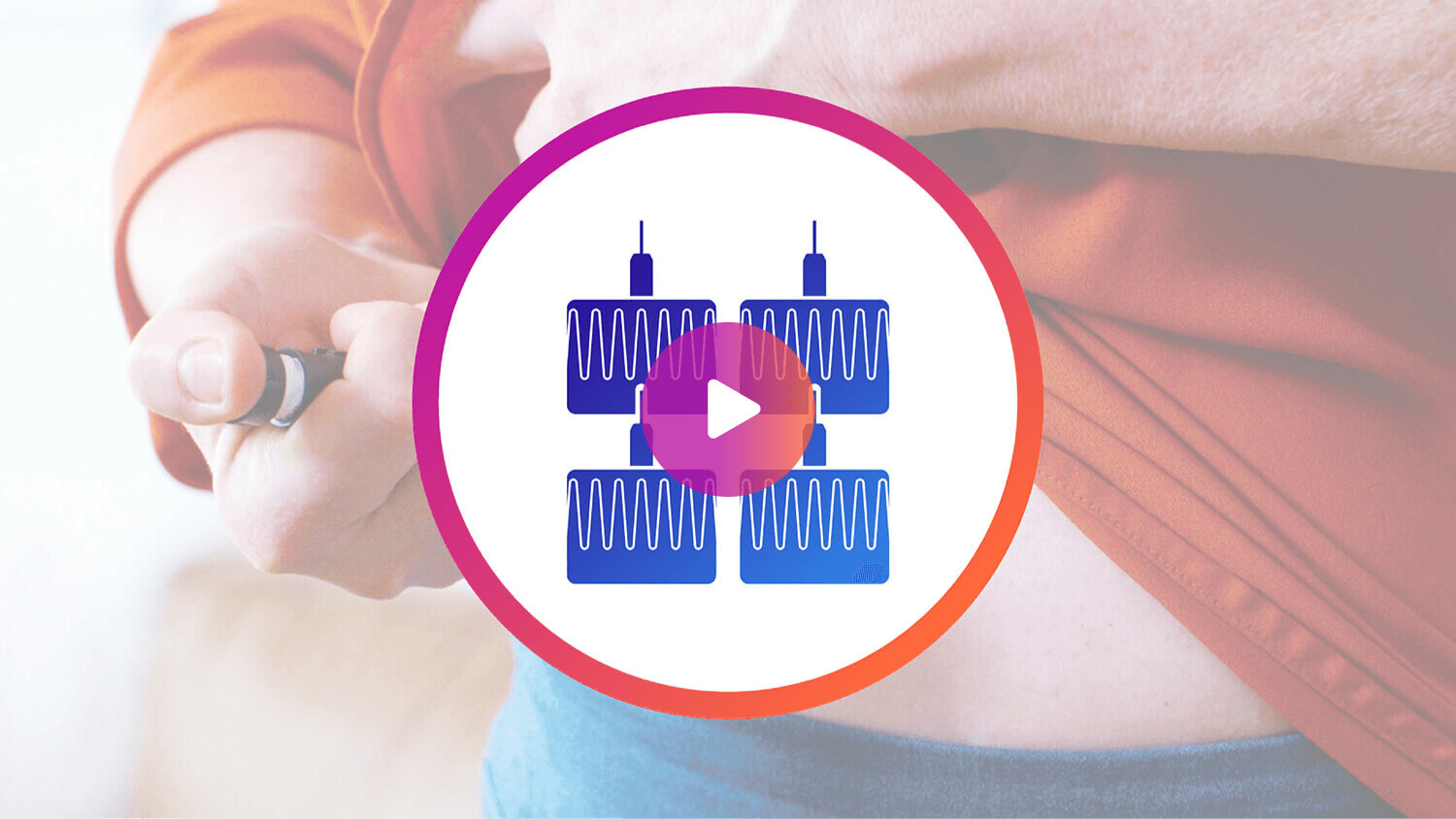
Rotating injection sites correctly could help to avoid the development of lumps and bumps under your skin known as lipohypertrophy (lipo). Injecting into lipo can affect how your body absorbs insulin, leading to blood sugar variations.5 Discover the best sites to use and learn how to rotate between them effectively.
Use this handy tool to learn how to space your injections appropriately.
Download Tummy Template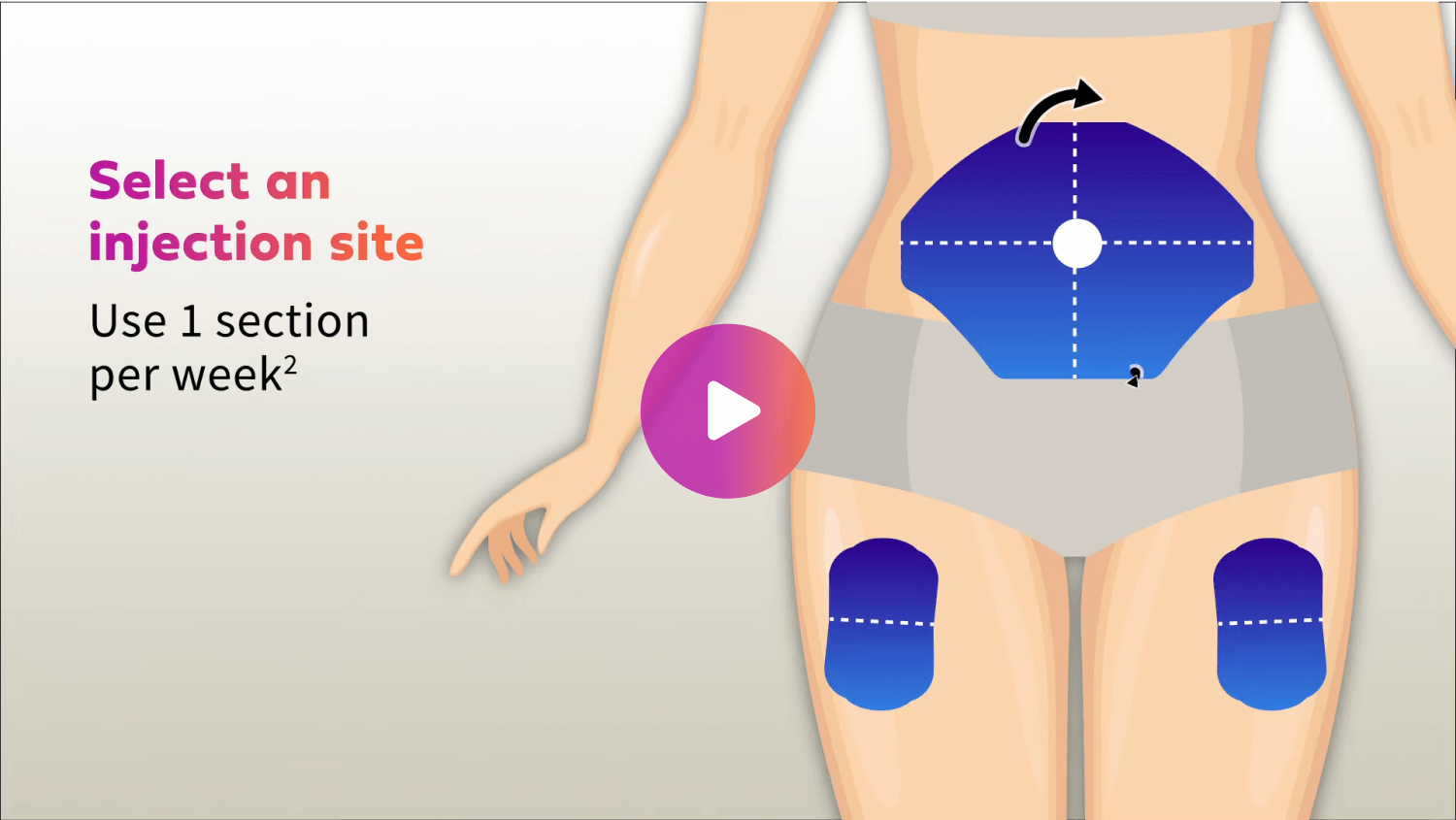
3. Using a shorter needle
Opt for a 4mm pen needle or 6mm insulin syringe, the recommended needle lengths across all injection sites.3
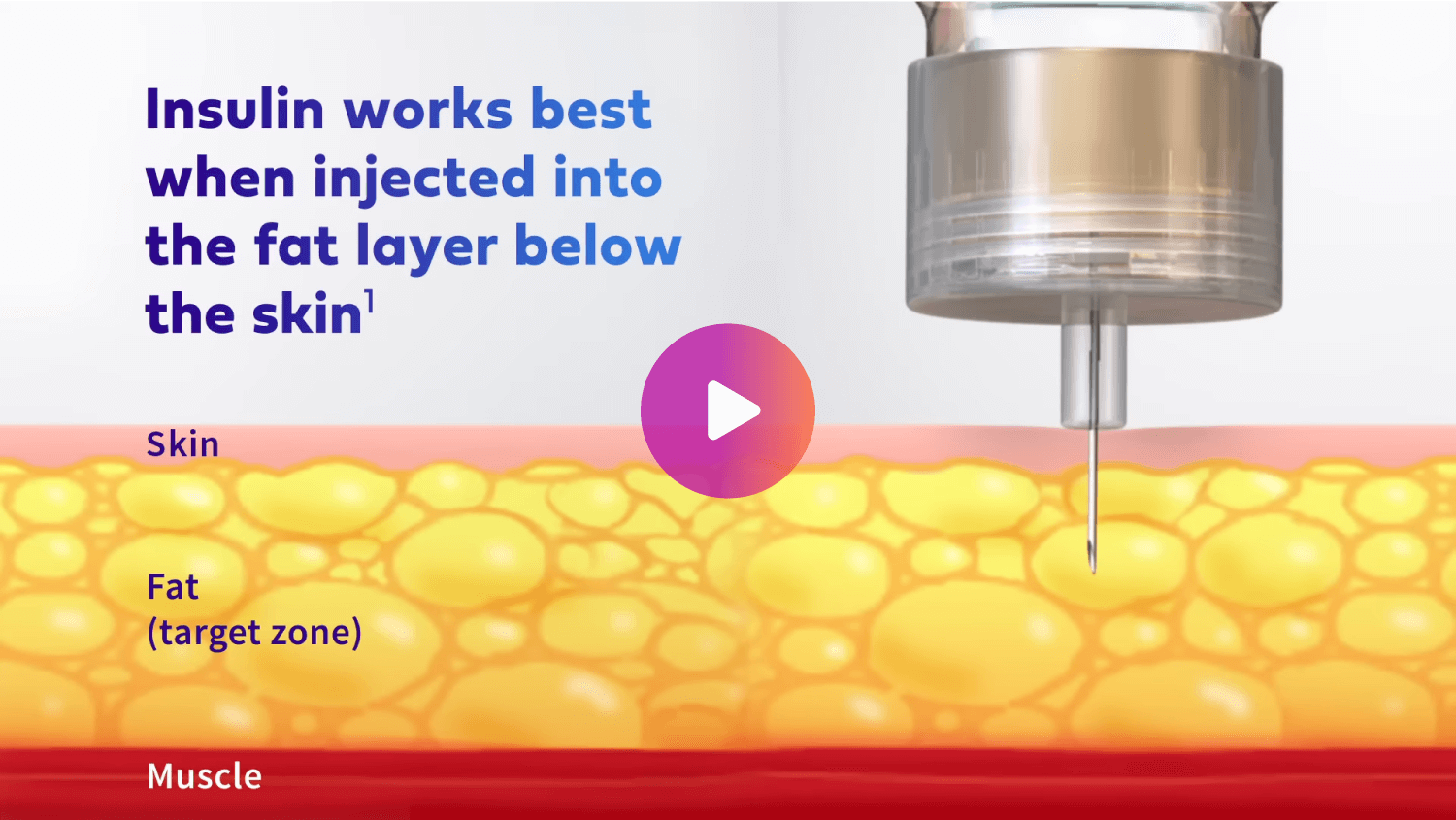

Learn to inject insulin properly with our step-by-step guide
Injecting insulin correctly is important to receive the full benefits of the medication.3
Learn the basic steps of how to inject insulin through our injection technique resources.

Avoid common injection mistakes
You may be surprised how an innovative pen needle design can help improve your injection experience.6,7
Learn More*116 patients with diabetes on insulin were randomized to 3 intervention groups to assess the change from baseline in A1C at 6 months following structured injection technique training and changing to a shorter needle length (4mm or 5mm pen needle). Baseline A1C for all groups was similar (mean: 8.5-8.8% [± 1.4-1.9%]).
†Injection pain and unpleasantness have not been clearly associated with limited needle reuse.
References
1. Kesavadev J, Saboo B, Krishna MB, Krishnan G. Evolution of Insulin Delivery Devices: From Syringes, Pens, and Pumps to DIY Artificial Pancreas. Diabetes Ther. 2020;11(6):1251-1269. doi:10.1007/s13300-020-00831-z.
2. Misnikova IV, Gubkina VA, Lakeeva TS, Dreval AV. A randomized controlled trial to assess the impact of proper insulin injection technique training on glycemic control. Diabetes Ther. 2017;8(6):1309-1318.
3. Frid AH, Hirsch LJ, Menchior AR, Morel DR, Strauss KW. Worldwide injection technique questionnaire study: injecting complications and the role of the professional. Mayo Clin Proc. 2016;91(9):1224-1230.
4. Frid AH, Kreugal G, Grassi G, et al. New insulin delivery recommendations. Mayo Clin Proc. 2016;01(9):1231-1255.
5. Blanco M, Hernández MT, Strauss KW, Amaya M. Prevalence and risk factors of lipohypertrophy in insulin-injecting patients with diabetes. Diabetes Metab. 2013;39(5):445-453.
6. Aronson R, Gibney MA, Oza K, et al. Insulin pen needles: effects of extra-thin wall needle technology on preference, confidence, and other patient ratings. Clin Ther. 2013;35(7):923-933.
7. Hirsch L, Gibney M, Berube J, Manocchio J. Impact of a modified needle tip geometry on penetration force as well as acceptability, preference, and perceived pain in subjects with diabetes. J Diabetes Sci Technol. 2012;6(2):328-335.